
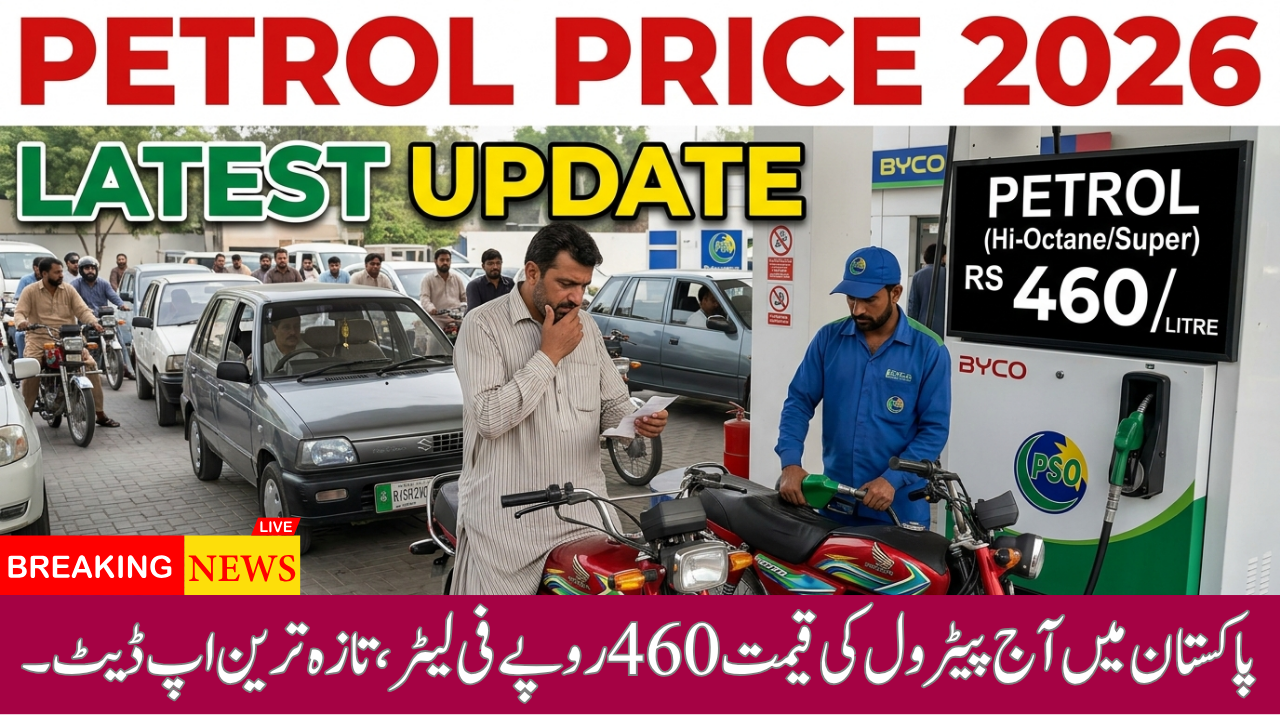
Petrol Price in Pakistan Today 2026 – Latest Update
The petrol price in Pakistan today 2026 has become one of the most searched topics due to rising inflation and economic challenges. Fuel prices directly affect transportation, daily expenses, and overall cost of living.
The Government of Pakistan regularly updates petrol prices based on international oil rates, exchange rate fluctuations, and economic policies.
Also Read:
Police Department Jobs Sub Inspector – & Traffic Analyst (BPS-14) Apply Online
Current Petrol Price Situation
In recent months, petrol prices have seen significant fluctuations. The increase in global crude oil prices and currency depreciation has led to higher fuel costs in Pakistan.
Key factors affecting petrol prices include:
- International oil market trends
- USD to PKR exchange rate
- Government taxes and levies
- Import costs and supply chain
These factors play a major role in determining the final petrol price for consumers.
Why Petrol Prices Are Increasing?
The main reasons behind rising petrol prices in Pakistan are:
- Increase in global oil prices
- Economic instability
- IMF agreements and policy conditions
- High import dependency
Due to these challenges, fuel prices often increase, creating financial pressure on the public.
Government Response & Relief Measures
The government has taken several steps to control the impact of rising fuel prices:
- Fuel subsidy plans for low-income groups
- Reduction in unnecessary government expenses
- Promotion of alternative energy sources
- Policy changes to stabilize economy
Relief measures are expected to help citizens manage rising costs.
Expected Petrol Price Changes
Experts believe that petrol prices may fluctuate depending on:
- Global oil market trends
- Political and economic conditions
- Government policy decisions
There is always a possibility of both increase and decrease in fuel prices.
Ehsaas Program New Registration 2026 – Apply Online, Eligibility, 8171 Check & Latest Updates
Impact on Public
Rising petrol prices affect:
- Transport fares
- Food prices
- Business costs
- Daily household expenses
Low-income families are the most affected due to inflation.
Tips to Save Fuel
- Use public transport
- Avoid unnecessary travel
- Maintain vehicle properly
- Use fuel-efficient driving techniques
These small steps can help reduce fuel expenses.
Official Website for Updates
👉 Check official updates here:
https://www.finance.gov.pk
👉 Oil & Gas Regulatory Authority (OGRA):
https://www.ogra.org.pk
📌 Always follow official sources for accurate petrol prices.
FAQs (Petrol Price in Pakistan)
Q1: Petrol price Pakistan me kaun set karta hai?
Government aur OGRA mil kar price decide karte hain.
Q2: Petrol price kyun barhta hai?
Global oil prices aur economic conditions ki wajah se.
Q3: Kya petrol price kam ho sakta hai?
Haan, agar international prices kam ho jayein.
Q4: Har kitne din baad price change hota hai?
Usually 15 din me update hota hai.
Q5: OGRA ka kya role hai?
OGRA petrol price recommend karta hai.
Q6: Kya subsidy milti hai?
Kabhi kabhi government subsidy deti hai.
Q7: Diesel aur petrol me kya farq hai?
Diesel heavy vehicles ke liye hota hai, petrol cars ke liye.
Q8: Kya petrol price stable ho sakta hai?
Economic stability par depend karta hai.
Q9: Public par kya impact hota hai?
Transport aur daily expenses barh jate hain.
Q10: Latest petrol price kaha check karein?
Official websites ya news sources par.
FOLLOW FOR NEW UPDATES:
WhatsApp’s Channel:
https://whatsapp.com/channel/0029Vb7MYua0gcfLWzto2T01
Facebook Page:
https://www.facebook.com/share/1BPh2YAJ3a/
Conclusion
The petrol price in Pakistan today 2026 continues to impact every aspect of daily life. From transportation to household expenses, fuel prices play a crucial role in the economy.
While the government is trying to provide relief through subsidies and policy changes, global factors still heavily influence petrol rates. Citizens are advised to stay updated with official announcements and adopt fuel-saving habits.
Disclaimer
This article is for informational purposes only; petrol prices may change based on government policies and market conditions.