

Introduction to Enterprise Cloud Computing in 2024
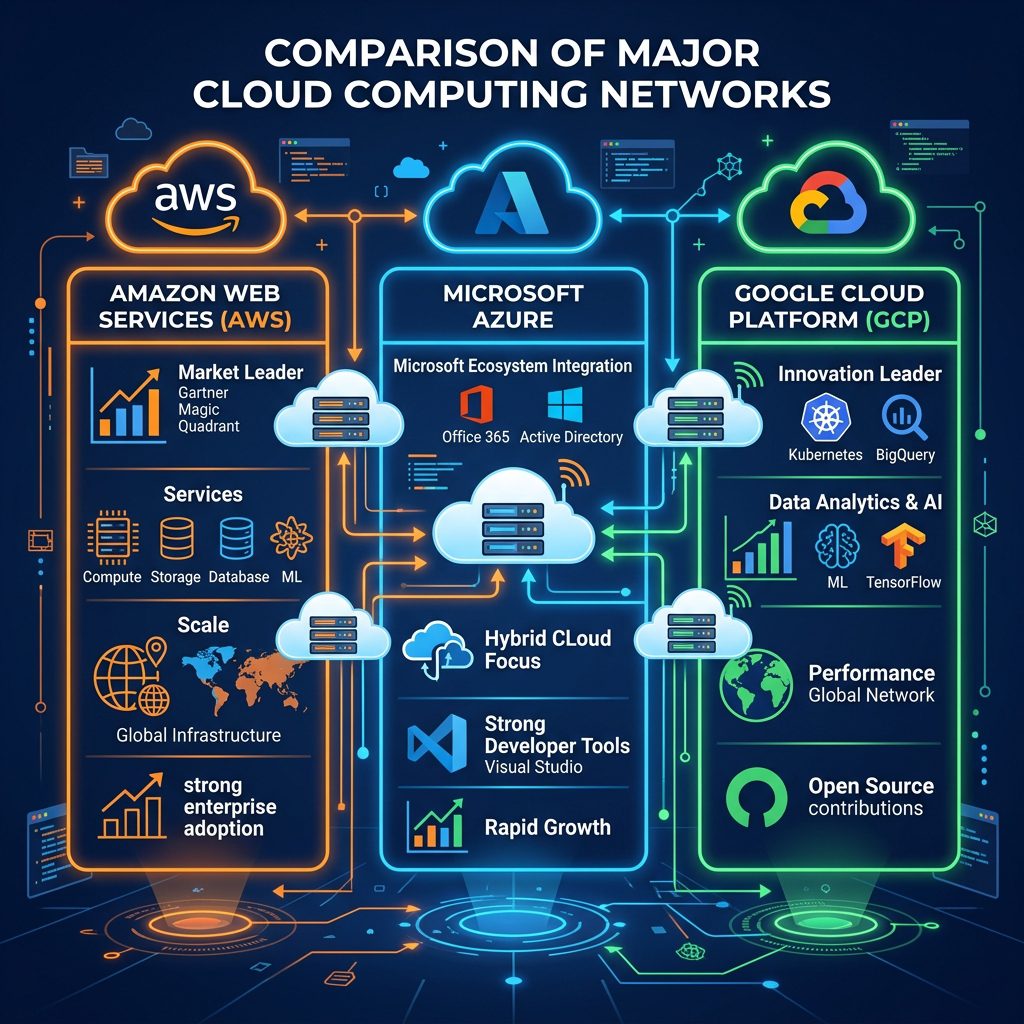
The transition from on-premise data centers to cloud computing is no longer a futuristic goal; it is the fundamental baseline for any competitive enterprise in 2024. However, the decision of *which* cloud provider to choose is more complex than ever. The “Big Three”—Amazon Web Services (AWS), Microsoft Azure, and Google Cloud Platform (GCP)—dominate the market, holding a combined market share of over 65%. While they all offer the core functionalities of Infrastructure as a Service (IaaS), Platform as a Service (PaaS), and Software as a Service (SaaS), their underlying philosophies, pricing structures, and specialized capabilities are vastly different.
For Chief Information Officers (CIOs) and enterprise architects, migrating to the cloud is a multi-million-dollar decision that will dictate the company’s agility, security, and operational expenses for the next decade. Vendor lock-in is a real concern, and migrating from one cloud provider to another post-deployment is notoriously expensive and time-consuming. Therefore, getting it right the first time is critical.
In this comprehensive, 2000-word guide, we will break down the strengths, weaknesses, pricing models, and ideal use cases for AWS, Azure, and Google Cloud, helping you make an informed decision for your enterprise.
1. Amazon Web Services (AWS): The Market Pioneer
Launched in 2006, Amazon Web Services had a massive head start in the cloud computing industry. It is the undisputed market leader, boasting the largest market share (around 32%) and the most extensive ecosystem of services and third-party integrations.
Core Strengths of AWS
- Unmatched Depth and Breadth of Services: AWS offers over 200 fully featured services from data centers globally. Whether you need basic compute instances (EC2), managed relational databases (RDS), or highly specialized satellite data ingestion (AWS Ground Station), AWS has a service for it.
- Maturity and Stability: Because AWS has been operating at an enterprise scale longer than anyone else, its core services are incredibly robust. Outages are rare, and the documentation and community support are unparalleled.
- Global Reach: AWS has the largest global footprint, with Regions and Availability Zones spanning every major continent, ensuring low latency and data compliance for global enterprises.
Weaknesses of AWS
- Complexity and Steep Learning Curve: The sheer volume of services and configuration options can be overwhelming. Setting up a secure, cost-optimized AWS environment requires highly specialized (and expensive) cloud architects.
- Confusing Pricing: AWS pricing is notoriously difficult to forecast. Data egress fees (the cost of moving data out of AWS) can lead to massive “bill shock” if not carefully managed.
Ideal Use Case for AWS
AWS is the default choice for massive enterprises that require maximum flexibility, global scale, and a highly customizable infrastructure. It is also favored by startups that anticipate hyper-growth and want an infrastructure that will never be a bottleneck.
2. Microsoft Azure: The Enterprise Favorite
Microsoft Azure, launched in 2010, has aggressively closed the gap with AWS, securing approximately 23% of the market. Microsoft leveraged its decades-long dominance in enterprise software (Windows, Office, Active Directory) to seamlessly integrate Azure into existing corporate IT environments.
Core Strengths of Azure
- Seamless Hybrid Cloud Integration: This is Azure’s biggest selling point. Most enterprises cannot migrate 100% of their workloads to the public cloud overnight. Azure provides tools like Azure Arc and Azure Stack to seamlessly manage both on-premise servers and cloud instances from a single pane of glass.
- Microsoft Ecosystem Synergy: If your enterprise already relies heavily on Windows Server, SQL Server, Active Directory, and Microsoft 365, Azure is the logical choice. Microsoft offers significant licensing discounts (Azure Hybrid Benefit) to customers who migrate their existing Windows/SQL licenses to the cloud.
- Strong Compliance and Security: Azure boasts more compliance certifications than any other cloud provider, making it highly attractive to heavily regulated industries like healthcare and government.
Weaknesses of Azure
- Reliability Issues: Historically, Azure has suffered from slightly more high-profile outages than AWS, though the gap has narrowed significantly in recent years.
- Complex Management Interfaces: While it integrates well with Windows, the Azure portal itself can sometimes feel less intuitive and more cluttered than its competitors.
Ideal Use Case for Azure
Azure is the absolute best choice for established enterprises with a heavy legacy footprint in Microsoft technologies. If you are a .NET development shop or rely on Active Directory for identity management, Azure provides a frictionless path to the cloud.
3. Google Cloud Platform (GCP): The Innovator in Data
Google Cloud is the youngest of the Big Three, holding roughly 10% of the market. While it lacks the sheer breadth of AWS and the enterprise entrenchment of Azure, Google Cloud excels in areas where Google itself leads the world: data analytics, machine learning, and open-source technologies.
Core Strengths of Google Cloud
- Superior Data Analytics and AI: GCP’s BigQuery is widely considered the best enterprise data warehouse on the market, capable of querying petabytes of data in seconds. Furthermore, Google’s Vertex AI provides unparalleled machine learning capabilities, making GCP the go-to choice for AI-driven enterprises.
- Open-Source Champion: Google originally developed Kubernetes, the industry standard for container orchestration. GCP’s Google Kubernetes Engine (GKE) remains the most robust and seamless environment for running containerized microservices.
- Aggressive Pricing and Transparency: GCP generally offers more straightforward pricing and often undercuts AWS and Azure on compute costs. They also offer “Sustained Use Discounts” that are applied automatically, without the need for complex capacity planning.
Weaknesses of Google Cloud
- Smaller Enterprise Footprint: GCP has fewer global data centers than AWS and Azure, and a smaller network of managed service providers (MSPs) and enterprise partners.
- Frequent Product Deprecation: Google has a notorious reputation for killing off products (even in the cloud space), which can make risk-averse enterprise CIOs nervous.
Ideal Use Case for Google Cloud
GCP is the premier choice for “data-first” companies, digital-native startups, and enterprises that heavily utilize containers and microservices architecture. If machine learning, big data analytics, and Kubernetes are central to your strategy, GCP is the winner.
Head-to-Head Comparison: Key Metrics
To make the best decision, enterprises must evaluate these providers across several key dimensions:
1. Compute Capabilities
All three offer robust virtual machines (EC2 for AWS, Virtual Machines for Azure, Compute Engine for GCP). AWS offers the most instance types (optimized for memory, compute, or GPU). Azure offers deep integration with Windows Server environments. GCP offers highly customizable machine types where you can specify the exact number of vCPUs and RAM.
2. Storage Solutions
AWS S3 is the industry standard for object storage, known for its incredible durability and tiered pricing (Glacier for cold storage). Azure Blob Storage is highly competitive and integrates well with Microsoft data tools. Google Cloud Storage is excellent, and GCP’s Cloud Spanner (a globally distributed relational database) is a technological marvel that its competitors struggle to match.
3. Pricing and Cost Management
Cloud pricing is notoriously complex. While GCP often wins on raw compute price, AWS and Azure offer massive discounts for enterprises willing to sign 1-to-3-year commitments (Reserved Instances). A multi-cloud strategy (using more than one provider) can theoretically optimize costs, but the data egress fees between clouds usually negate any savings.
The Multi-Cloud Reality
In 2024, the debate is rarely about choosing *only* one provider. According to recent surveys, over 80% of enterprises employ a multi-cloud strategy. A common architecture involves using AWS for core application hosting (due to its reliability and ecosystem), Azure for identity management and internal corporate tools, and Google Cloud purely for heavy data analytics and AI model training.
However, managing a multi-cloud environment requires extreme discipline. It forces your engineering teams to learn three different ecosystems, and complicates security and compliance monitoring.
Conclusion: Making the Right Choice
There is no single “best” cloud provider; there is only the best provider *for your specific business context*. If you want the safest, most mature option with the largest talent pool to hire from, choose AWS. If you are a traditional enterprise heavily invested in Microsoft software, choose Azure. If your business revolves around big data, AI, and Kubernetes, choose Google Cloud.
Before signing a multi-year enterprise agreement, run comprehensive proof-of-concept (PoC) deployments on all three platforms, carefully calculating not just the compute costs, but the data transfer fees and the cost of engineering talent required to manage the infrastructure.