
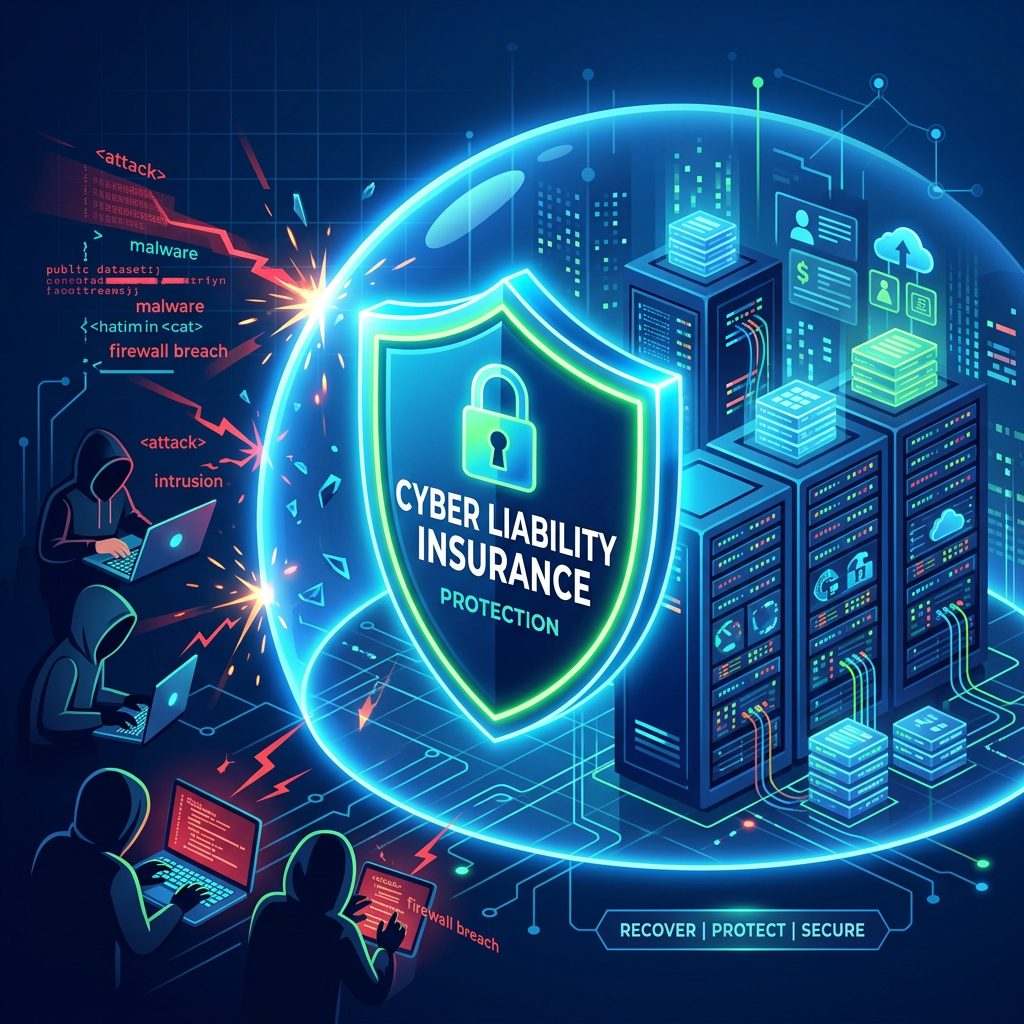

Introduction to Cyber Liability Insurance
In the modern digital landscape, data is the new oil, and just like physical assets, it needs rigorous protection. However, despite the best firewalls and enterprise-grade encryption, the reality is that cyber breaches happen. The question is no longer *if* a business will experience a cyberattack, but *when*. This harsh reality has given rise to one of the most critical risk management tools of the 21st century: Cyber Liability Insurance.
For small and medium-sized enterprises (SMEs) as well as massive Fortune 500 corporations, the financial fallout of a data breach can be catastrophic. According to the IBM Cost of a Data Breach Report 2023, the global average cost of a data breach reached an all-time high of $4.45 million. For a small business operating on tight margins, a single ransomware attack or phishing scam can lead to immediate bankruptcy. This is where a comprehensive cyber liability insurance policy steps in, providing a financial safety net that covers the devastating costs associated with digital threats.
In this ultimate guide, we will explore exactly what cyber liability insurance is, why every business needs it in 2024, what it typically covers (and what it doesn’t), how to calculate your coverage needs, and the top providers in the market. Whether you are an IT consultant, a healthcare provider, or a retail store owner, understanding cyber insurance is no longer optional—it is a fundamental pillar of modern business operations.
What is Cyber Liability Insurance?
Cyber liability insurance is a specialized insurance product designed to protect businesses from Internet-based risks, and more generally from risks relating to information technology infrastructure and activities. Risks of this nature are typically excluded from traditional commercial general liability policies, or at least are not specifically defined in traditional insurance products.
Unlike property insurance which protects your physical building and inventory, cyber insurance protects your digital assets. It covers a variety of both first-party and third-party risks associated with e-business, the Internet, networks, and informational assets.
First-Party Coverage vs. Third-Party Coverage
Understanding the difference between first-party and third-party coverage is crucial when selecting a policy.
First-Party Coverage: This covers the direct costs your business incurs as a result of a cyber incident. This is the financial impact that hits your company directly. Examples include:
- Data Breach Incident Response: The cost of hiring IT forensics experts to investigate the breach, determine how it happened, and stop it.
- Ransomware Extortion Payments: If hackers lock your systems and demand payment, some policies will cover the cost of the ransom (subject to legal regulations).
- Business Interruption Loss: The income you lose because your systems are down and you cannot operate normally.
- Public Relations Campaigns: The cost of hiring PR experts to manage the narrative and restore your company’s reputation after a highly publicized breach.
- Notification Costs: In most jurisdictions, you are legally required to notify customers whose data has been compromised. First-party coverage pays for mailing letters, setting up call centers, and providing credit monitoring services to affected individuals.
Third-Party Coverage: This protects you when a third party (usually a client, customer, or partner) sues you because your failure to secure their data caused them harm. Examples include:
- Network Security and Privacy Liability: Covers legal defense costs and settlements if a customer sues you for allowing their personal information (PII) to be stolen.
- Regulatory Fines and Penalties: Covers fines levied by government bodies (like GDPR in Europe or HIPAA in the US) for failing to protect consumer data.
- Media Liability: Covers claims of copyright infringement, defamation, or libel related to content published on your website or social media channels.
Why Small Businesses Are Prime Targets in 2024
A common misconception among small business owners is that hackers only target massive corporations like Target, Equifax, or Sony. The reality is quite the opposite. Hackers view small businesses as “low-hanging fruit.” Small businesses often lack the sophisticated cybersecurity infrastructure, dedicated IT security teams, and employee training programs that large corporations possess.
Furthermore, small businesses are frequently used as a gateway to attack larger enterprises. A hacker might compromise a small HVAC vendor to gain access to the network of a massive retail chain (which is exactly what happened in the infamous Target data breach). Because of this supply chain vulnerability, many large corporations now legally require all their vendors and contractors to carry cyber liability insurance before signing a contract.
The Evolving Threat Landscape: Ransomware, Phishing, and Deepfakes
The cyber threat landscape in 2024 is more sophisticated than ever. Here are the primary threats that make cyber insurance a necessity:
1. Ransomware as a Service (RaaS)
Ransomware is malicious software that encrypts a victim’s files. The attacker then demands a ransom from the victim to restore access to the data upon payment. In 2024, “Ransomware as a Service” (RaaS) has become a booming dark web industry. Experienced hackers develop the malware and lease it to less technical affiliates who carry out the attacks. This has led to an explosion in the sheer volume of ransomware attacks.
2. Social Engineering and Phishing
Despite advances in email filtering, phishing remains the most common entry point for hackers. Employees are tricked into clicking malicious links or opening infected attachments. In recent years, “spear-phishing” has become prevalent, where attackers heavily research a specific target (like a CFO) and craft highly personalized emails to steal credentials or authorize wire transfers. Cyber insurance policies often include “Social Engineering Fraud” coverage to protect against these specific wire transfer scams.
3. AI-Powered Deepfakes
With the rapid advancement of Artificial Intelligence, hackers are now using AI voice cloning and deepfake videos to impersonate executives. An employee might receive a phone call that sounds exactly like the CEO, urgently requesting a wire transfer to a “new vendor.” The financial losses from these AI-driven social engineering attacks can be staggering.
How to Choose the Right Cyber Insurance Policy
Not all cyber insurance policies are created equal. When shopping for coverage, businesses must carefully evaluate their specific risk profile. Here are the key steps to selecting the right policy:
Step 1: Conduct a Risk Assessment
Before contacting an insurance broker, you must understand your own vulnerabilities. What type of data do you collect? (e.g., credit card numbers, social security numbers, medical records). Where is it stored? (e.g., on-premise servers, AWS, third-party SaaS applications). What is your current cybersecurity posture? (e.g., do you use Multi-Factor Authentication (MFA), endpoint detection, and regular backups?). Insurance carriers will ask these questions during the underwriting process, and your answers will dictate your premium.
Step 2: Scrutinize the Exclusions
The most important part of an insurance policy is often what it *does not* cover. Common exclusions in cyber policies include:
- Prior Acts: Breaches that occurred before the policy inception date, even if they were discovered during the policy period (unless you have retroactive coverage).
- Unencrypted Data: If you lose a laptop containing thousands of unencrypted customer records, the claim might be denied because you failed to follow basic security protocols.
- State-Sponsored Attacks (Act of War Exclusions): Historically, insurance policies exclude damages caused by acts of war. Recently, carriers have tried to apply this exclusion to cyberattacks attributed to nation-states (like Russia or North Korea). It is crucial to understand how your policy defines “cyber warfare.”
- Failure to Maintain Minimum Security Standards: If you claim on your application that you use MFA, but you disable it and get hacked, the carrier can deny the claim due to misrepresentation.
Step 3: Evaluate the Incident Response Panel
A good cyber insurance policy doesn’t just provide a check; it provides an elite response team. When a breach occurs, you need immediate access to breach coaches (specialized lawyers), IT forensics firms, and PR agencies. Check which vendors the insurance carrier partners with. A top-tier carrier will have a 24/7 hotline that immediately deploys these experts to contain the damage.
The Cost of Cyber Liability Insurance in 2024
Premiums for cyber insurance have fluctuated wildly over the past five years. Following massive ransomware losses in 2020 and 2021, carriers aggressively raised premiums (sometimes by 100% or more) and demanded strict security controls. In 2024, the market has stabilized slightly, but underwriting requirements remain stringent.
For a small business with $1 million in revenue, a standard $1 million limit policy might cost between $1,500 and $3,500 annually. However, this is highly dependent on the industry. A healthcare clinic storing HIPAA-protected data will pay significantly more than a landscaping company that only stores basic contact information.
To secure the best rates, businesses must demonstrate strong “cyber hygiene.” Carriers will often require proof of:
- Mandatory Multi-Factor Authentication (MFA) for all remote access and email accounts.
- Regular employee phishing training and security awareness programs.
- Offline, encrypted, and regularly tested data backups.
- Endpoint Detection and Response (EDR) software installed on all company devices.
Conclusion: An Indispensable Asset
As we navigate an increasingly digitized economy, cyber liability insurance is no longer a luxury reserved for massive tech conglomerates; it is a fundamental cost of doing business. The threat landscape is evolving faster than traditional IT defenses can keep up, making financial transfer mechanisms (like insurance) absolutely vital for survival.
A data breach can destroy trust, trigger crippling lawsuits, and halt operations indefinitely. By investing in a robust cyber liability insurance policy, businesses can ensure that a sophisticated hack is merely a temporary setback, rather than a fatal blow. Evaluate your risks, implement strong baseline security controls, and partner with a reputable insurance broker to find the coverage that will keep your enterprise secure in 2024 and beyond.